
Noble Hospitals and Research Centre: Pune’s First JCI-Accredited Tertiary Care Centre with Progressive Technology and Compassionate Innovation
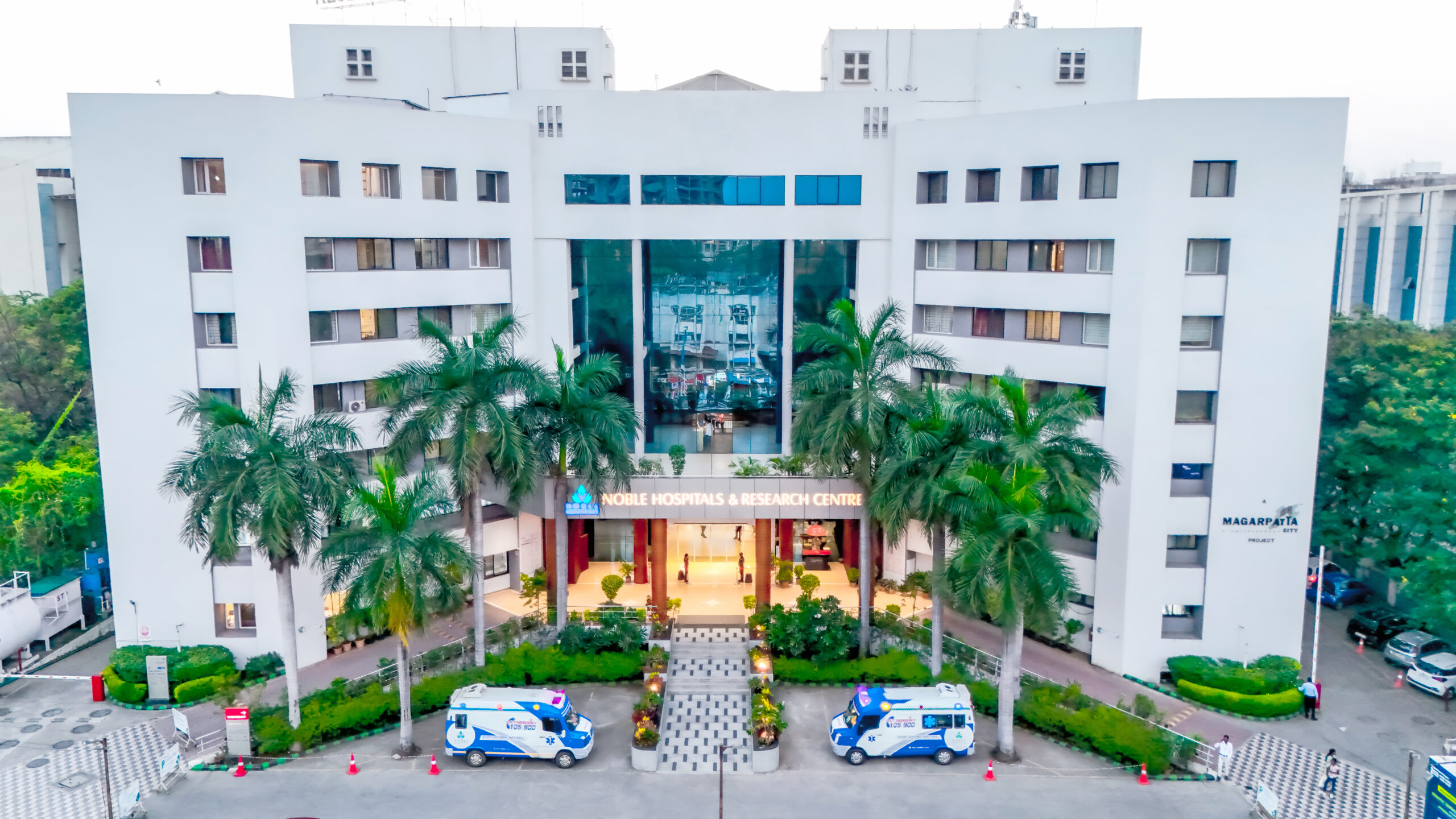
On a Mission to Make Noble Hospitals a Pioneer in Robotic Surgery and Emergency Care!
In a city once striving for world-class medical standards, Pune faced a serious healthcare challenge. Patients in need of specialised treatment had limited access to advanced technology and structured care programs. Many hospitals lacked international recognition and systems that could handle complex procedures. This often pushed people to seek help outside the city or settle for less.
Dr. Divij Mane, Director of Noble Hospitals and Research Centre, changed this reality. He saw the urgent need to bring world-class medical care to Pune and moved with clear intent. Under his leadership, Noble Hospitals earned the JCI Gold Seal. This recognition placed Noble among the top hospitals in Maharashtra and made it the first JCI-accredited tertiary care centre in Pune. It was a clear sign of their strong focus on safety, systems, and quality.
Dr. Divij also brought Maharashtra’s first SSI Mantra 3 robotic surgical system to Noble. Built in India, this system made complex surgeries more precise and less invasive. As a result, patients now recover faster and spend less time in the hospital.
On World Cancer Day, Noble opened Pune’s first stoma-care OPD. This gave cancer survivors and their families a space for long-term support. Dr. Divji also led efforts to earn NABH accreditation for the hospital’s emergency department. This strengthened the hospital’s ability to respond to critical cases with a clear and consistent process.
Dr. Divij’s leadership has changed the healthcare landscape of Pune. Noble Hospitals now offers advanced treatment, structured care, and systems that match international standards. His actions have redefined what medical care in Pune can look like.
Let us learn more about it’s journey:
Building Healthcare Without Borders
Noble Hospitals & Research Centre was established in 2007 in Hadapsar as a 250-bed facility. The foundation was led by the Mane family, with Chairman Dr. Dileep Mane and Director Dr. Divij Mane shaping the vision. From the start, it focused on multi-specialty care, not as a checklist of departments but as a system of integrated medicine. That meant using advanced equipment and following international clinical standards. The aim was never to add more beds. It was to build something that would match the world’s best in both quality and intent.
The strategy was clear. Instead of adding layers of complexity, the team created a structure that worked better. Nine centres of excellence were set up. Over 30 clinical departments function under one roof. Twelve operation theatres were designed as green OTs. Capacity was scaled to 350 beds. They brought in a 3 Tesla MRI early on. The neuro-cath lab includes 3D angiography. These were not upgrades. These were statements.
Then came the global benchmark. After two years of preparation, the hospital earned the JCI Gold Seal. This certification was more than a mark. It confirmed that the systems, protocols, infrastructure, and patient culture were aligned under one high standard. It validated a belief. Risks matter only when they shape outcomes. Every decision taken at Noble carried that thought.
The focus shifted from reaching global benchmarks to living by them. The team did not treat audits as one-time efforts. They made it part of their routine culture. That mindset allowed the hospital to become a hub for both local and international patients. Departments such as cardiology, neurology, oncology, orthopedics, obstetrics, and reproductive sciences see patients from across the country and outside.
Growth for Noble was not just about size or reach. It was about clarity. The hospital understood that a plan often breaks not due to its design but due to the pressure to follow it without error. So they adapted where needed. They stayed consistent where it mattered.
Today, Noble stands as more than a hospital. It is a medical institution that proves excellence can be built from intent, not just ambition.
Precision That Heals
Noble Hospitals began its journey into advanced care through diagnostic upgrades. It introduced 128-slice CT and 4D ultrasound and brought Pune its first 3 Tesla MRI. But the shift came with robotics in surgery. Orthopedic procedures and joint replacements found new support through robotic systems. da Vinci systems improved outcomes in urology and oncology. Patients walked within two days. They climbed stairs by the fifth day. By three months they returned to everyday routines.
In spine and sports cases where margins are thin Noble brought in navigation systems like IMRIS. These systems improved anatomical clarity and reduced surgical errors. The use of robotics was never about collecting machines. It was about changing how patients recover. One preterm baby who entered Noble’s NICU lived because of more than equipment. Human milk banks critical-care systems and infection controls helped that child reach full development benchmarks by year five. No brain bleeds. No infections. Only steady growth.
This contrast defines Noble. High-end machines and human care. On World Cancer Day a special outpatient department opened for stoma care. It was led by Dr. Divij. With help from Coloplast and trained nurses patients received custom support. They learned to live again. It was never just about adding machines to the building. It was about building systems where machines work for people. Noble made that possible.
Quality Systems and Accreditation
Pittances of goodwill can’t sustain institutional trust. Noble understood that. After securing JCI Gold Seal accreditation, they moved to NABH certification for their emergency department. This progression reinforced that protocols, standard operating procedures, infection control, emergency workflows, weren’t just documented. They were lived every day.
That shift brought measurable change. Induction programs now refresh staff annually while probationary induction ensures seamless onboarding. SOPs aren’t static, they evolve through continuous audit and feedback. In a city known for ambition and civic pride, Noble now stands as a symbol of progress with world‑class metrics .
Quality found its way into other practices too. Biomedical waste is monitored monthly, a waste dashboard published since 2021. Humanitarian efforts began extending beyond the hospital walls, health camps, community outreach, and preventive programs reinforce wellness culture. It’s not just about emergency response. It’s about building healthier communities.
Where Lives Were Saved and Systems Worked
What makes a hospital matter is whether lives were saved and changed. At Noble Hospitals, they were.
The NICU team cared for premature babies who were at risk of serious complications. Many were born far too early. Yet they avoided infection and bleeding. They lived. They grew stronger. They went home.
Liver and kidney transplants were done with precision. Ambulances moved through green corridors arranged by police, volunteers, and transplant coordinators. Behind every successful transplant was a donor who gave others a second chance.
These were not one-time miracles. They happened because of systems that worked and teams that trusted each other. Doctors, nurses, technicians, and coordinators planned every step. Timing mattered. So did communication. Everyone knew what to do and when to act.
At Noble, specialists did not stay within narrow boundaries. The neonatal experts knew what the transplant team was doing. The ICU doctors spoke to the emergency teams. Everyone shared one goal. To give patients the best shot at survival.
When the country faced the COVID crisis, Noble stepped up. The hospital did not just treat patients. It played a role in guiding public health. It organised conferences on obesity and diabetes where doctors from different fields shared what they knew. It became a place where ideas moved as freely as patients did.
This is not a story about big machines or tall buildings. It is about what happens when a hospital becomes a system that works. Where every life counts. Where people do more than heal. They build trust in medicine.
A Blueprint for Growth
Leadership does not follow a fixed path. Dr. Divij uses platforms like Times Mirror and Punekar News to argue that healthcare must be viewed as a national opportunity. Visionary leaders invest in people and infrastructure together. He believes in strengthening primary care, retaining medical talent, and building a reputation for clinical excellence. It is not about exporting patients. It is about raising the standard of care within the country.
His position is clear. Healthcare and education are pillars of national growth. At Noble, that belief has shaped its evolution. Clinical pharmacology interns continued as full-time professionals. They trained under experienced mentors like Dr. Amar Saste. They grew into a culture that values ongoing learning and shared knowledge. In two decades, Noble became a space for nurses, pharmacists, doctors, and researchers to build careers and advance science.
The ambition does not end with service. Research remains central. Noble seeks deeper global collaborations. It wants to participate in clinical trials. It wants to publish findings. It wants to shape the way medicine is practiced. The goal is to contribute to healthcare, not just deliver it. That vision accepts imperfection. The challenge is not in planning. The challenge is in learning to adjust as the world changes. Noble adapted its systems while staying committed to its purpose.
From a regional hospital in Hadapsar to a 350-bed JCI-accredited multi-specialty centre, every step has reflected clarity and direction. Noble balanced technology with human care. It learned that scale and quality can grow together. It made space for humility within ambition.
This is leadership focused on impact. It values real outcomes over public displays. It invests in people, systems, and ideas because it believes healthcare builds strong nations.
To be Separately:
Noble Hospitals Sets a New Benchmark in Critical Care with Global Accreditation
In a significant milestone for Pune’s healthcare system, Noble Hospitals & Research Centre has become the first quaternary care hospital in the city to receive the Joint Commission International (JCI) Gold Seal of Approval. This global accreditation has upgraded the hospital’s critical care services, including the Adult ICU, Paediatric ICU (PICU), and Neonatal ICU (NICU), placing it among the top providers in India and aligning it with global standards.
The Adult ICU at Noble Hospitals operates with internationally benchmarked protocols. Since adopting JCI standards, the hospital has recorded a notable drop in ICU mortality and hospital-acquired infections. Evidence-based care pathways such as Sepsis Management, Acute Myocardial Infarction, and Polytrauma Care guide timely interventions. Emergency responses are accelerated with the activation of codes like Code Blue, Code Stroke, and Code Polytrauma, mobilizing teams within minutes. Improved antibiotic protocols have also helped reduce misuse, leading to quicker recovery and lower costs.
The PICU offers dedicated care to infants, children, and adolescents facing critical conditions. It follows age-specific pathways tailored to various emergencies and chronic issues. Staffed by trained paediatric intensivists and nurses, the unit ensures round-the-clock care. Since accreditation, the PICU has achieved faster stabilization, shorter ventilator usage, and better family satisfaction, driven by open communication and family-inclusive care planning.
The Level III NICU addresses the needs of premature and critically ill new-borns. Led by expert neonatologists and equipped with modern technology, the unit has adopted clinical pathways for neonatal sepsis, birth asphyxia, and respiratory distress syndrome. With 24/7 neonatal transport services and personalized care, survival rates and long-term outcomes have improved significantly.
All three ICUs share a culture focused on quality and responsibility. Over 90% of ICU staff undergo quarterly JCI-mandated training, staying updated with global practices. The number of clinical audits has doubled, leading to real-time safety improvements. Innovations like electronic dashboards, barcode-based medication administration, and two-point patient ID systems have cut down clinical errors, making every ICU stay safer.
Patient feedback highlights rising confidence in care, better communication, improved hygiene, and overall satisfaction. These changes are reflected in outcomes across all age groups and conditions.
Dr Dileep Mane, Chairman and Managing Director of Noble Hospitals, said the JCI-accredited ICUs represent a daily commitment to safety and best practices. Dr Divij Mane, Director, added that the hospital’s goal remains consistent, to uphold the highest standards in healthcare while equipping skilled doctors with the best tools.
As Pune grows as a center for advanced healthcare, Noble Hospitals continues to deliver ethical, expert, and accessible treatment, offering world-class care for every patient, at every stage of life.
Quotes:
“Noble Hospitals began its journey into advanced care through diagnostic upgrades. It introduced 128-slice CT and 4D ultrasound and brought Pune its first 3 Tesla MRI. But the shift came with robotics in surgery.”
“From a regional hospital in Hadapsar to a 350-bed JCI-accredited multi-specialty centre, every step has reflected clarity and direction. Noble balanced technology with human care. It learned that scale and quality can grow together. It made space for humility within ambition.”